

Understanding the Irish school system is one of the first priorities for families considering sending their child to study in Ireland. School years, daily routines, uniforms, adaptation and accommodation may differ from what students know at home. This guide explains the essentials so parents and students know what to expect.
Studying at an Irish school is about much more than improving English. It means joining a school community, learning to navigate a new environment and using English every day with teachers, classmates and, when the programme includes this accommodation, an Irish host family.
Table of Contents
How Does the Irish School System Work?
School education in Ireland is mainly divided into Primary Education and Post-Primary or Secondary Education. Secondary education includes two main stages: Junior Cycle and Senior Cycle.
For an international family, the key is not to assume an automatic equivalence with the school system at home. Appropriate placement depends on age, previous studies, academic profile and the options available at each school.
Before starting a Primary & High School programme in Ireland, each student’s situation should therefore be considered individually.
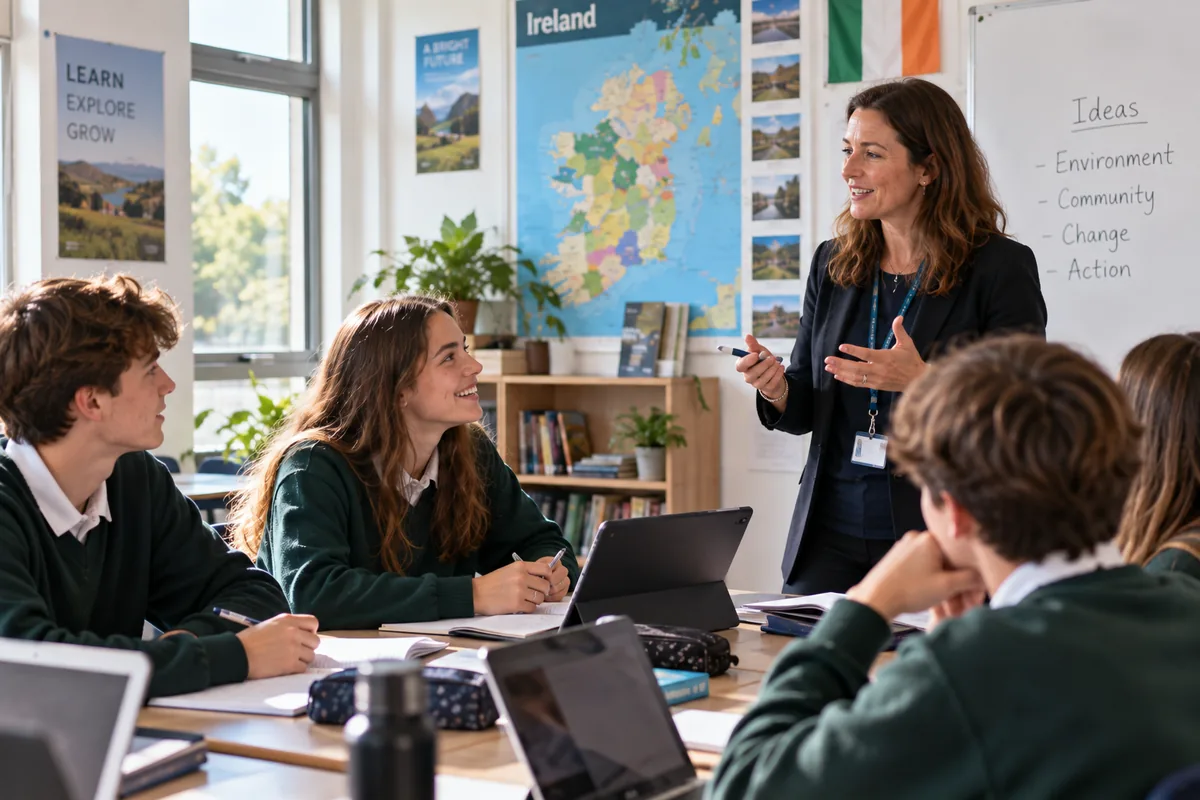
Primary and Secondary Education in Ireland
Primary Education
Primary education is the first major stage of schooling. For international students, joining an Irish school means using English as a real tool for learning, communicating and participating in school life.
Secondary Education
Secondary education is structured around Junior Cycle and Senior Cycle. Between these stages, students may take Transition Year, a year with a particular focus on personal development, exploration and broader educational experiences.
The exact structure, subjects and options vary between schools, so the most suitable school year should be considered for each individual student.
What Is Transition Year in Ireland?
Transition Year (TY) is one of the most distinctive features of the Irish school system. It sits between Junior Cycle and the final stage of Senior Cycle and is designed to offer a broader educational experience before the final years of secondary school.
Depending on the school, it may include projects, activities, practical experiences and personal-development opportunities alongside academic work. The exact programme varies by school.
For an international student, it can be especially valuable because it encourages participation, communication and integration into the school community.
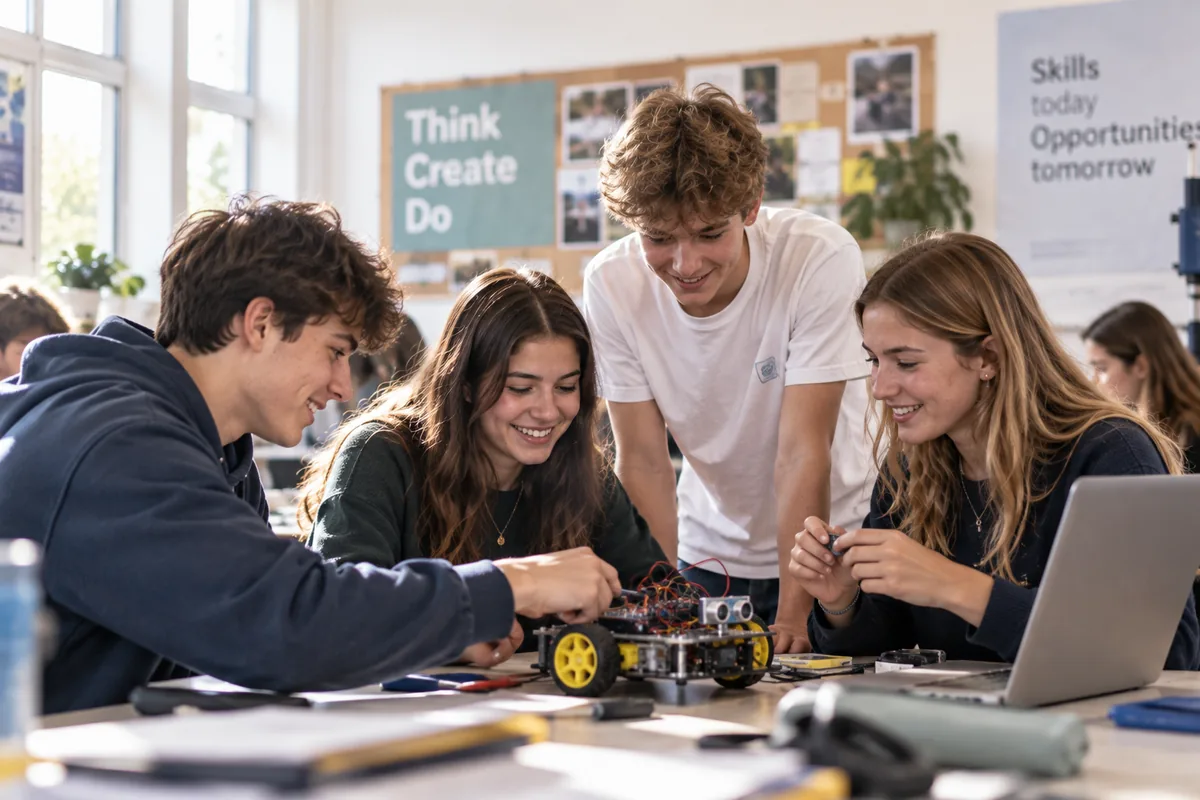
What Is a Typical School Day in Ireland Like?
Everyday school life involves much more than subjects. Students become part of the school’s routines, hear English throughout the day, interact with teachers and classmates and gradually learn how their new environment works.
At first, it is normal to need more concentration to follow explanations, understand different accents or join conversations. As the weeks pass, these situations become part of everyday life.
This is one of the major advantages of spending an academic year in Ireland: English becomes the normal language for studying and socialising.

School Uniforms in Ireland
Uniforms are part of everyday life in many Irish schools. The design and required garments depend on each school.
For an international student, wearing a uniform can also have symbolic value: it helps reinforce the feeling of being part of real Irish school life rather than simply attending an English course.
Subjects, Projects and Activities
Subjects and activities depend on the school, year and academic pathway. Students should be prepared for working methods and classroom dynamics that may differ from those they know at home.
Group work, classroom participation, projects and school activities create opportunities to use English for a real purpose: completing tasks, sharing ideas and building relationships.
How Does an International Student Adapt?
Adaptation does not happen overnight. The first days can combine excitement, curiosity and some uncertainty. Students need to understand new routines, meet classmates, get used to different teachers and function in English for many hours each day.
Gradually, small milestones appear: understanding a conversation without translating it mentally, participating in class, meeting friends or asking for something naturally. These steps help develop confidence, independence and communication skills.
Read more about improving spoken English through immersion in Ireland.
Living With an Irish Host Family During the School Year
When a programme includes a host family, learning continues after school. Conversations at home, meals and everyday routines allow students to use English in situations beyond the classroom.
In Lakeland’s Primary & High School Programme, host-family accommodation forms part of the academic and cultural experience.
Find out more in Living With an Irish Host Family: What Students Can Expect.
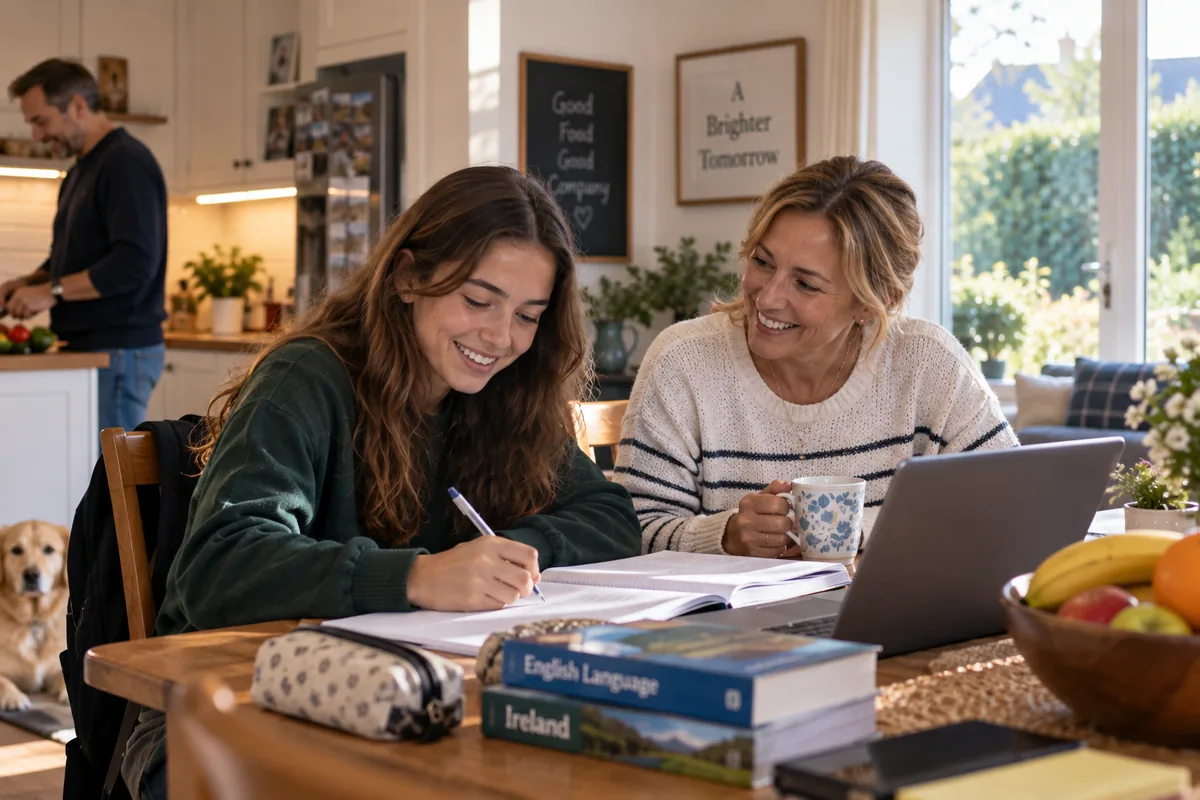
Studying in a Smaller Irish Community
Where a student lives also shapes the experience. Large cities offer many possibilities, while a smaller community can make it easier to establish routines, get to know the surroundings and participate in local life.
Lakeland has its main centres in Athlone, Mullingar and Tullamore, in the Midlands. Not every programme necessarily takes place in all three centres, so the specific location should always be confirmed.
Read more about why smaller Irish towns can offer a valuable study experience.
Student Support During the Stay
For families, support is particularly important when a young person is spending several months away from home.
Lakeland’s current Primary & High School Programme includes 24-hour guardianship assistance and progress reporting. The aim is to help students develop independence while knowing that support is available when they need guidance.
This is especially relevant during arrival, the start of school, adaptation to the host family and the first stages of cultural adjustment.
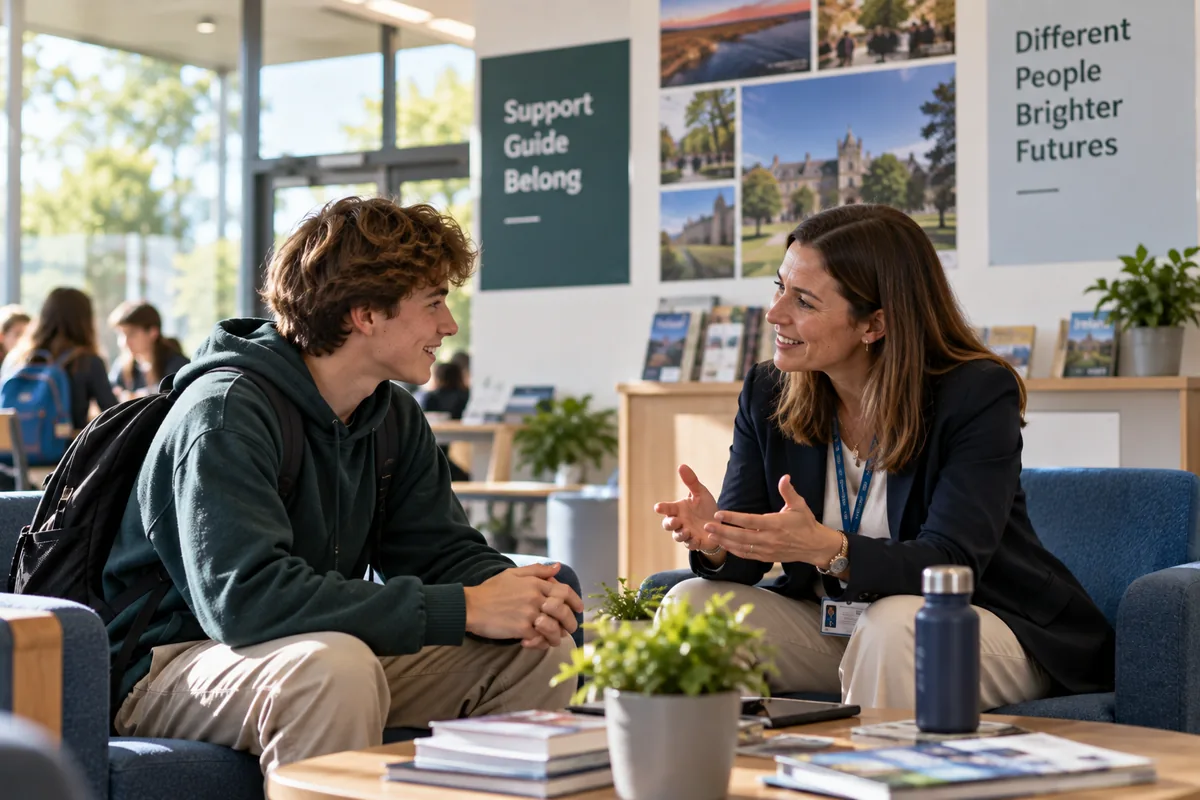
Is the Irish School System Right for Your Child?
There is no single answer for every family. Before choosing a programme, consider the student’s age, maturity, academic situation, English level, personality and, above all, their own motivation.
A teenager does not need to be completely independent before travelling. Developing independence is part of the experience. But students should understand that studying in Ireland means joining real school life: friendships and discoveries, but also classes, rules, homework and adaptation.
When the student, family, school and support team work in the same direction, the experience can offer much more than language improvement.
Frequently Asked Questions About the Irish School System
Secondary education is mainly organised into Junior Cycle and Senior Cycle. Transition Year may sit between these stages, depending on the school and the student's academic pathway.
Transition Year is a school year between Junior Cycle and the final stage of Senior Cycle. It can combine academic learning, projects, personal development and practical experiences. The exact programme varies by school.
Uniforms are common in many Irish schools. The exact garments and requirements depend on each school.
Yes, when the chosen programme includes host-family accommodation. Lakeland's Primary & High School Programme includes host-family accommodation, allowing students to continue using English outside school.
Lakeland's current Primary & High School Programme includes 24-hour guardianship assistance and progress reporting. Specific conditions should always be confirmed for the relevant academic year.
Yes. Lakeland's current programme includes term, semester and full-year options, subject to the conditions and availability for the relevant academic year.
Experience School Life in Ireland
Understanding the Irish school system helps families make a more informed decision, but every student needs an option suited to their age, academic profile and goals.
At Lakeland Language Centre, we organise educational programmes in Ireland and support students throughout their experience. If you are considering a term, semester or academic year, our team can explain the available options.
Request information about studying in Ireland and tell us what kind of experience you are looking for.